A2P SMS Message Context: What to Log When Investigating Incidents Without Compromising Privacy
Design operational logs that help reconstruct A2P incidents without duplicating message content or confusing technical statuses with proof of receipt or consent.
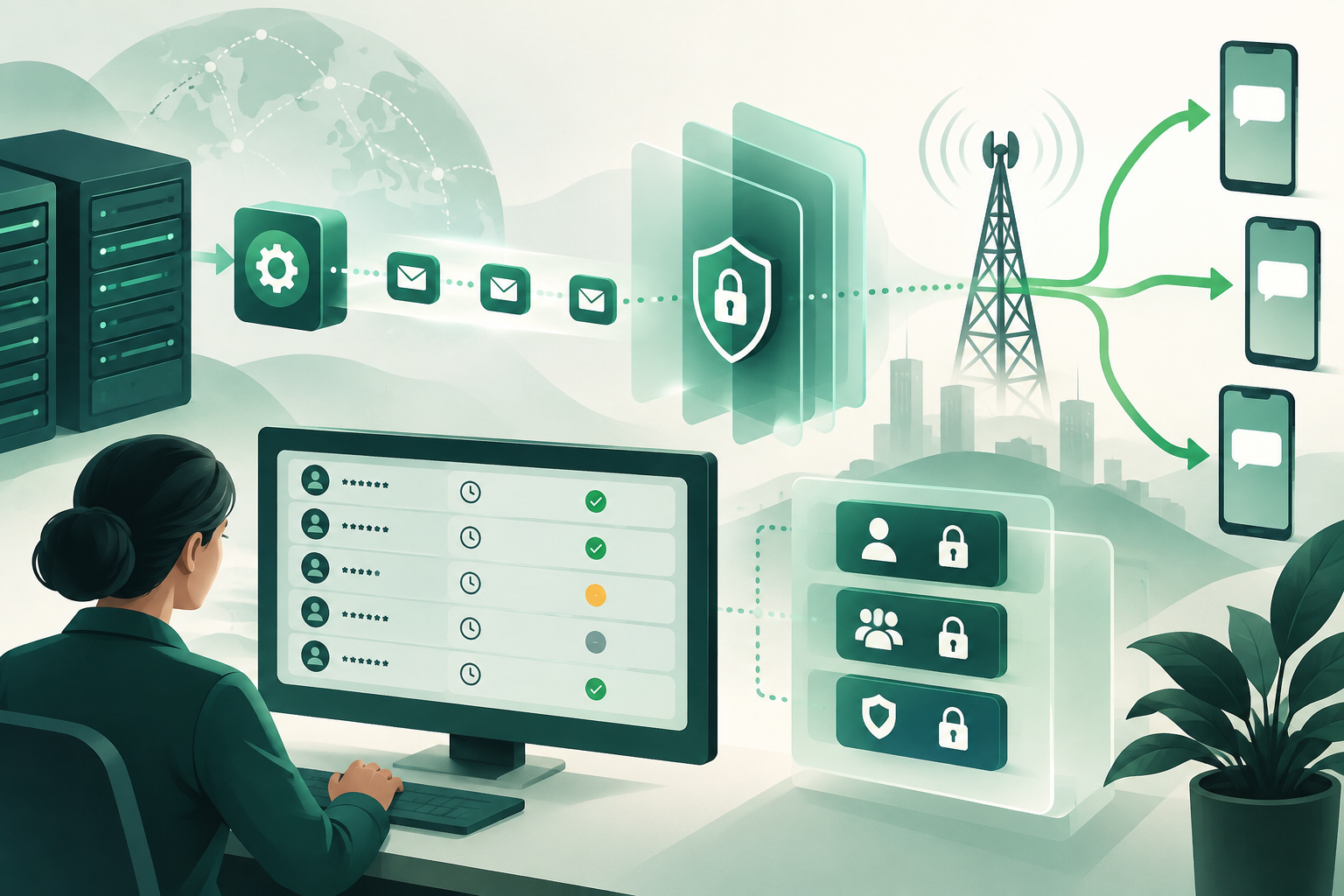
Investigating an incident does not require keeping a copy of the message
A useful operational log makes it possible to correlate events and reconstruct an SMS journey: when it was requested, which system processed it, which route was attempted, and which statuses were received. That does not mean the technical log needs to reproduce the message body, consent data, and all recipient information.
The practical decision is to separate what is needed to diagnose message transport from what is needed for other purposes. Before adding a field, define which investigative question it answers, who will access it, and how long it is needed. If a transaction ID can correlate events, it may not also be necessary to store the clear-text number in every log entry.
Data minimization here is a design principle, not a claim that there is a universal set of fields or a legal retention period that applies to everyone. Obligations depend on jurisdiction, each organization’s role, and the specific purpose; validate them with legal and privacy leads.
- Design logs to answer defined operational questions, not to accumulate data just in case.
- Where feasible, separate transport, consent, billing, and content into distinct systems or logical datasets.
- Document the source and limitations of every data point used in an investigation.
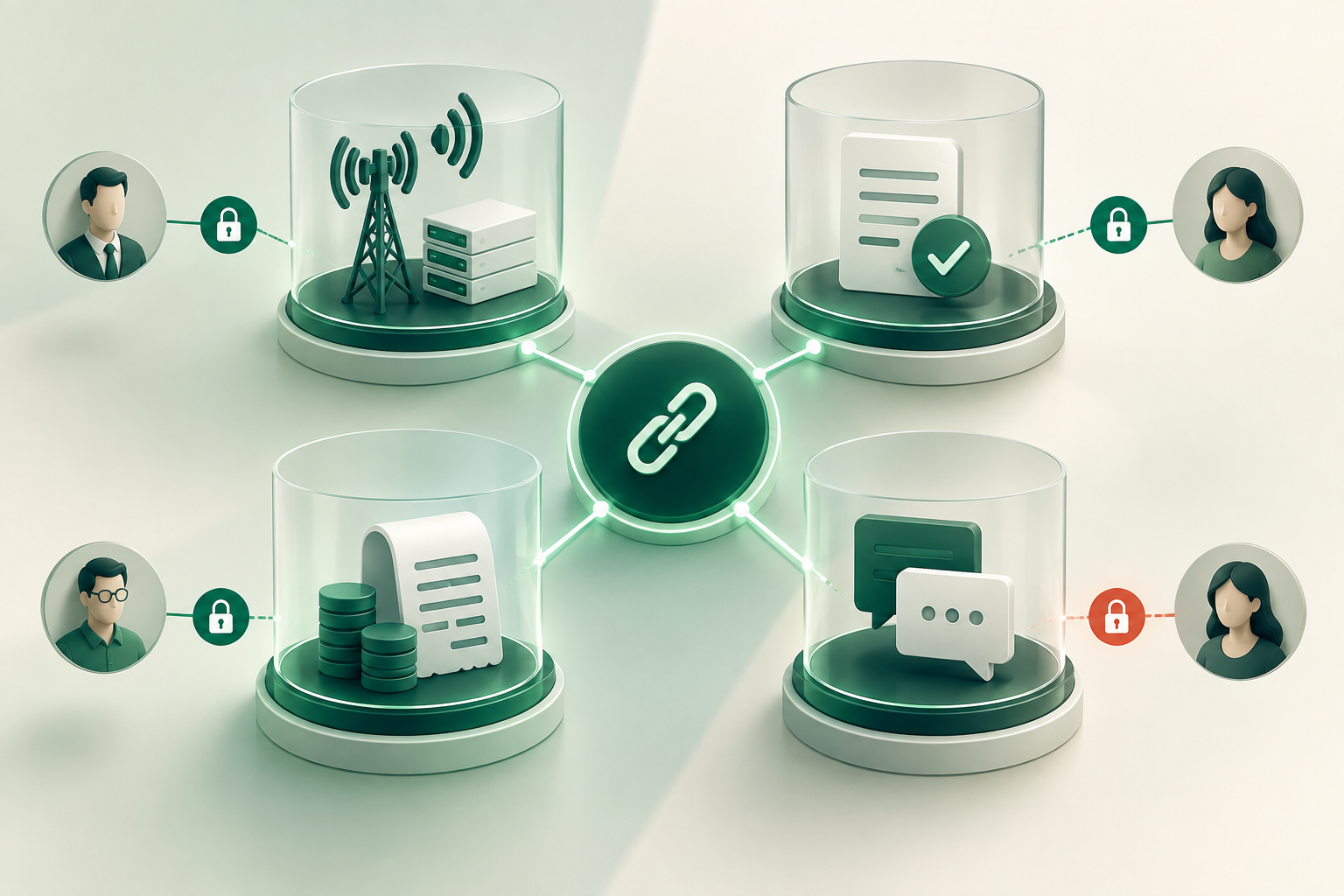
Separate purposes and sources of evidence
Transport logs help reconstruct attempts, responses, and technical events. Consent evidence documents the basis and context of permission or another applicable condition for sending a message. Billing requires data that can substantiate charges and reconciliation. If content needs to be retained, it may require different controls because of its sensitivity and the purpose that justifies keeping it.
Do not treat an approved template as proof that a specific person consented to receive a message. In the Colombian procedure cited by the CRC, template validation checks consistency between the content, the declared messaging modality, and the stated type of consent; the text also clarifies that this validation does not involve reviewing, approving, or storing the actual values of dynamic fields generated for each user. This applies to that procedure and does not establish a universal logging rule for other countries or systems.
Therefore, if an investigation requires proof of a recipient’s consent, look for evidence in the process or system intended to record it. A sending log can link to that evidence through a controlled reference, but should not be presented as a substitute for it.
- Assign a specific purpose to each dataset: transport, consent, billing, or content.
- Use correlatable references instead of copying data from another system when a copy is unnecessary.
- Distinguish template validation from proof of an individual’s consent.
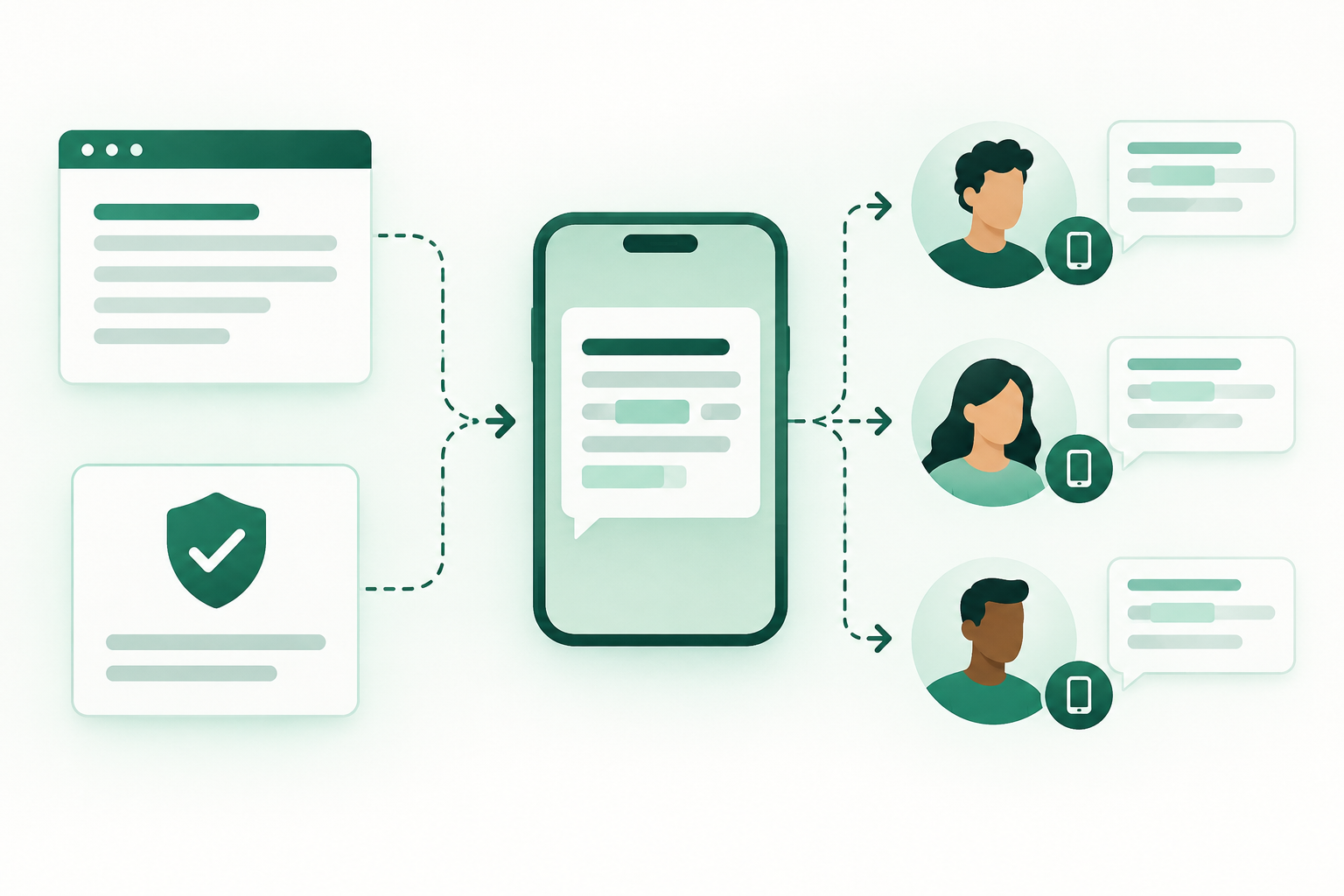
Minimum operational fields: what to record and how certain it is
An initial schema may include an event ID and an identifier that can be correlated across systems; a destination reference, pseudonymized where feasible; traffic type; declared sender; known destination and operator, with an indication of how that information was obtained; the selected route or provider; timestamps for each stage; and the statuses or responses received.
This list is neither a mandatory standard nor a guarantee that every investigation can be resolved. Adapt it to the actual flow and preserve data provenance. For example, distinguish an operator inferred before sending from one reported by a provider and from a status received later. If the source, time zone, or meaning of a status is unknown, flag that uncertainty instead of presenting it as a verified fact.
It is useful to record a timestamp for each event and specify the time zone or use a common representation agreed upon across systems. Do not invent a handset receipt timestamp if the only available evidence is a provider response. For each transition, keep enough context to link the event to the previous one without automatically including the SMS body.
- Identifiers: event, request, and cross-system correlation IDs, with rules to prevent collisions.
- Context: traffic type, sender, known destination or operator, and the data’s source or confidence level.
- Route: attempted provider or route, identified according to what each system actually reports.
- Times and statuses: a timestamp for each stage, the source system, and the value received, preserving its original meaning.
Pseudonymize the destination without losing correlation
Replacing a number with a token can reduce its exposure in operational tools, but it does not automatically make the log anonymous. If someone can link the token to the number using a table, key, or auxiliary information, the data can still be correlated under that design.
Choose a technique based on the need. If it is enough to recognize that two events relate to the same destination within one system, use a stable identifier and restrict who can resolve it. If cross-system correlation is needed, agree on a common method and scope; avoid reusing identifiers indiscriminately in contexts that do not need to be linked. Keep the mapping table or keys separate from the logs and limit access to justified functions.
Test the method against real tasks: investigating retries, reconciling statuses, or responding to an incident. If the token changes with every event, correlation may be impossible; if it is reused too broadly, it may make activity easier to link. The decision requires balancing operational usefulness and exposure, without assuming that a specific technique provides anonymization or by itself meets a legal obligation.
- Define whether you need correlation within one system or across systems.
- Separate and protect keys or tables that can recover the number.
- Document the identifier’s scope, responsible parties, and permitted uses.
- Do not describe data as anonymous if it can still be linked to a person.
What acknowledgments and DLRs prove—and what they do not
An acknowledgment or DLR provides evidence of an event according to the system that generated it and the meaning that system assigns to the status. It may help reconstruct how a message was processed, but its value depends on the route, integration, status definition, and reliability of the information received. Preserve the original status and source; add an internal interpretation only if it is clearly labeled as such.
Receiving a DLR does not, by itself, prove that a person read the message, that the content appeared on a particular handset, or that the recipient is who they claim to be. Nor does it prove consent. If the provider does not offer enough evidence to answer the question, document the limitation and request clarification or additional evidence rather than overstating certainty.
An HLR lookup may provide network information depending on the tool and context, but it does not prove consent, identity, number ownership, or guaranteed delivery. Do not use it to turn a hypothesis about the destination into a claim of receipt.
- Record who issued the acknowledgment, when it was received, and the status definition provided by the integration.
- Keep the received status separate from an operational conclusion and from verified handset receipt.
- Escalate to the provider when your own logs cannot determine the outcome; preserve the uncertainty.
Access, exports, and query auditing
Limit each access to the function that needs it. A team checking route availability may need identifiers and statuses, but not access to message content or the ability to resolve numbers. A team authorized to investigate a case may need temporary access to more detailed data, with a recorded reason and defined scope.
Apply controls to exports, support tools, and working copies as well. Depending on the design and control needs, record at least who accessed or exported sensitive data, when, and for what purpose. Check that technical accounts and provider access still match current responsibilities; do not assume an internal screen is the only place where copies may exist.
Define a process for granting, reviewing, and revoking permissions. The available evidence does not establish a universal set of controls or replace security analysis and applicable obligations; specific permissions should be adapted to the environment and risk.
- Separate permissions for viewing statuses, resolving tokens, exporting data, and accessing content.
- Require justification for exceptional access and regularly review who still has permissions.
- Include auxiliary tools, exports, and support access in the data inventory.
Retention and deletion: decide by purpose, not habit
The available evidence does not establish a universal period for retaining A2P operational logs. Define retention based on purpose, the obligations applicable to each organization, and the operational need you can justify. Set different periods where transport, consent, billing, or content datasets serve different purposes or have different requirements.
Document which event starts the retention period, who authorizes exceptions, and how deletion is applied across primary systems, exports, and working copies. Review the policy when workflows, providers, or investigative needs change. If a legal obligation or investigation requires preservation, validate the handling with the appropriate leads before routine deletion.
The renewable monthly validity period for templates mentioned in the cited Colombian resolution concerns approved templates and their deactivation conditions; it does not set how long to retain messages, DLRs, or personal records.
- Link each retention period to a documented purpose and obligation or need.
- Define rules for exceptions, review, and deletion across all relevant locations.
- Do not extrapolate the validity period for an A2P template to the retention of transport logs.
A practical workflow for investigating a case
1. Define the question: for example, whether a request was accepted, which route was attempted, or what status an integration returned. Do not start by requesting the full message content if events and statuses can answer the question.
2. Search for the correlatable identifier and reconstruct the sequence using available timestamps and sources. Check whether clocks and status definitions are comparable. Preserve original values and label inferences.
3. If the investigation requires linking the destination, request token resolution through an authorized process. Review only the data needed and keep that lookup separate from the general log.
4. Compare internal statuses with data received from the provider. If the evidence does not clarify the outcome, ask the provider for available details and record what it said and what remains uncertain. Do not turn a DLR or HLR lookup into proof of reading, identity, or consent.
5. Close the case with a conclusion proportionate to the evidence, document limitations, and apply the defined retention and deletion rules. If the incident raises a legal or privacy issue, escalate it to the appropriate leads.
- Specific question → correlation → event review → authorized lookup → provider comparison → conclusion limited to the evidence.
- Good logs reduce the need for content and identifying data, but do not guarantee that every external event can be verified.
- Review the schema if investigations repeatedly depend on fields that are not currently captured.
Frequently asked questions
Which fields should an A2P SMS operational log include?
As a starting point, consider correlatable identifiers, traffic type, sender, known destination or operator with its source, attempted route, timestamps for each stage, and received statuses. Adapt the fields to the flow and operational question; this is not a universal list or a general legal requirement.
Does a DLR prove that the recipient received or read the SMS?
Not by itself. A DLR is a status reported by a system, and its meaning depends on the route and integration. It does not necessarily prove that the message appeared on a handset, that someone read it, or that consent existed.
Does pseudonymizing a number make the log anonymous?
Not necessarily. If the number can be recovered using a key, table, or auxiliary information, the token can be used to link the data back. Protect those mechanisms and limit the use and scope of correlation.
How long should A2P logs be retained?
The available evidence does not support a universal period. Define and document retention based on purpose, operational need, and the obligations applicable to each organization and jurisdiction, with review and deletion rules.
Does an approved A2P template prove an individual’s consent?
No. In the cited Colombian procedure, template validation checks whether the content is consistent with the declared messaging modality and stated type of consent, but it does not involve reviewing or storing user-specific dynamic values. That validation does not, by itself, prove individual consent.
Does an HLR lookup confirm identity or guarantee delivery?
No. An HLR lookup does not prove consent, identity, or number ownership, and it does not guarantee delivery. Interpret its results according to what the tool actually provides.
Sources consulted
- Resolución CRC 8308: aprobación y gestión de plantillas A2PComisión de Regulación de Comunicaciones de Colombia (CRC)
- Protección de datos: marco de la Unión EuropeaComisión Europea