A2P SMS Technical Trace Sampling and Retention: Data Minimization
An operational guide to deciding what to log, how to sample according to risk, and how to limit access and retention when investigating A2P SMS incidents.
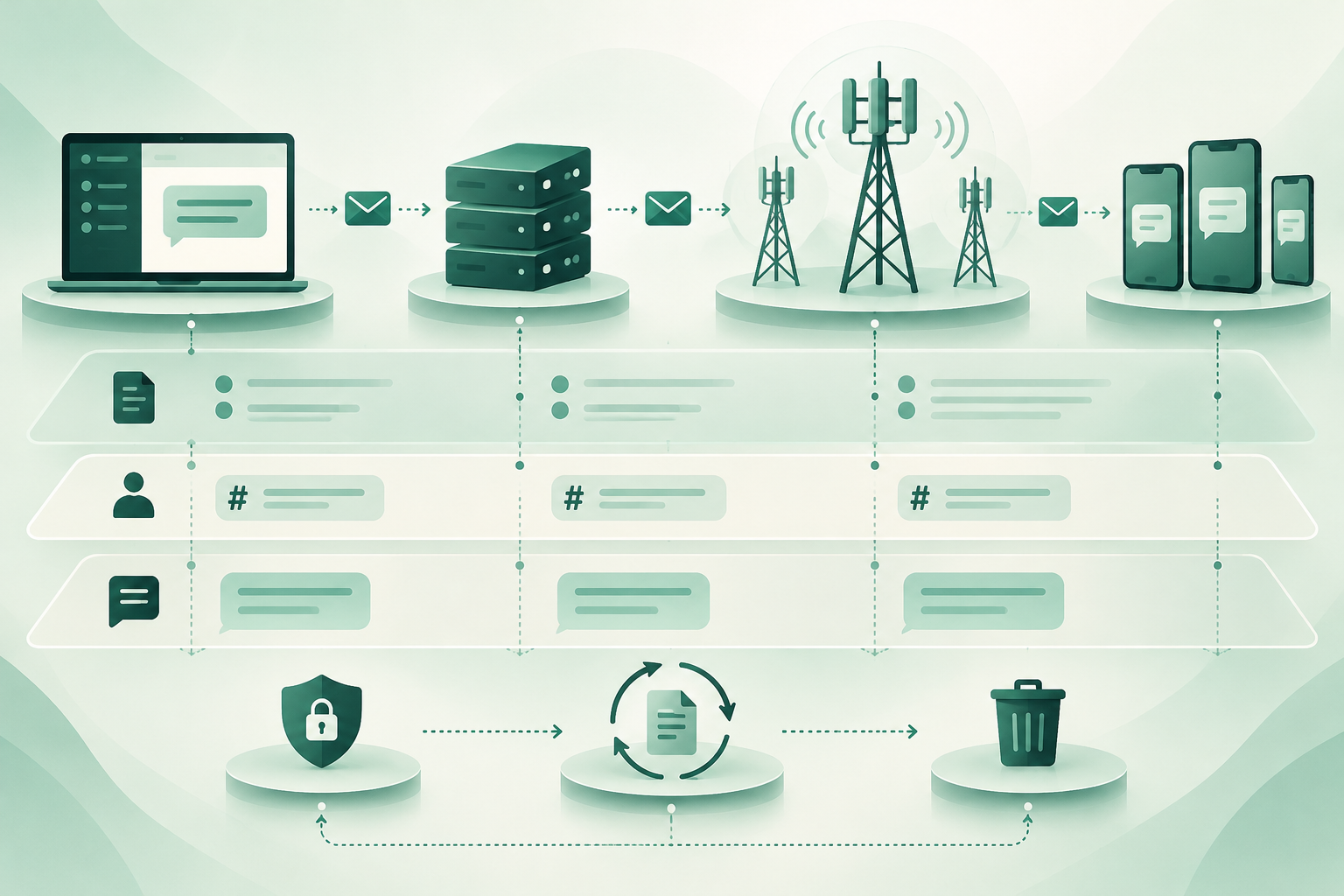
A useful trace can also accumulate sensitive information
Traces help reconstruct what happened in a messaging operation—for example, by comparing recorded events, their timestamps, reported statuses, and the route used. That usefulness does not justify storing all available data or keeping it indefinitely.
There is no universal rule here for which fields to log, what percentage to sample, or how long to retain records. Technical needs depend on the system and type of incident; applicable obligations depend on the context and should be reviewed with privacy leads and legal counsel.
- Treat logging as a design decision: define a purpose before collecting data.
- Separate data needed for diagnosis from information that is merely convenient or incidental context.
- Document logging limits and uncertainties in delivery statuses.
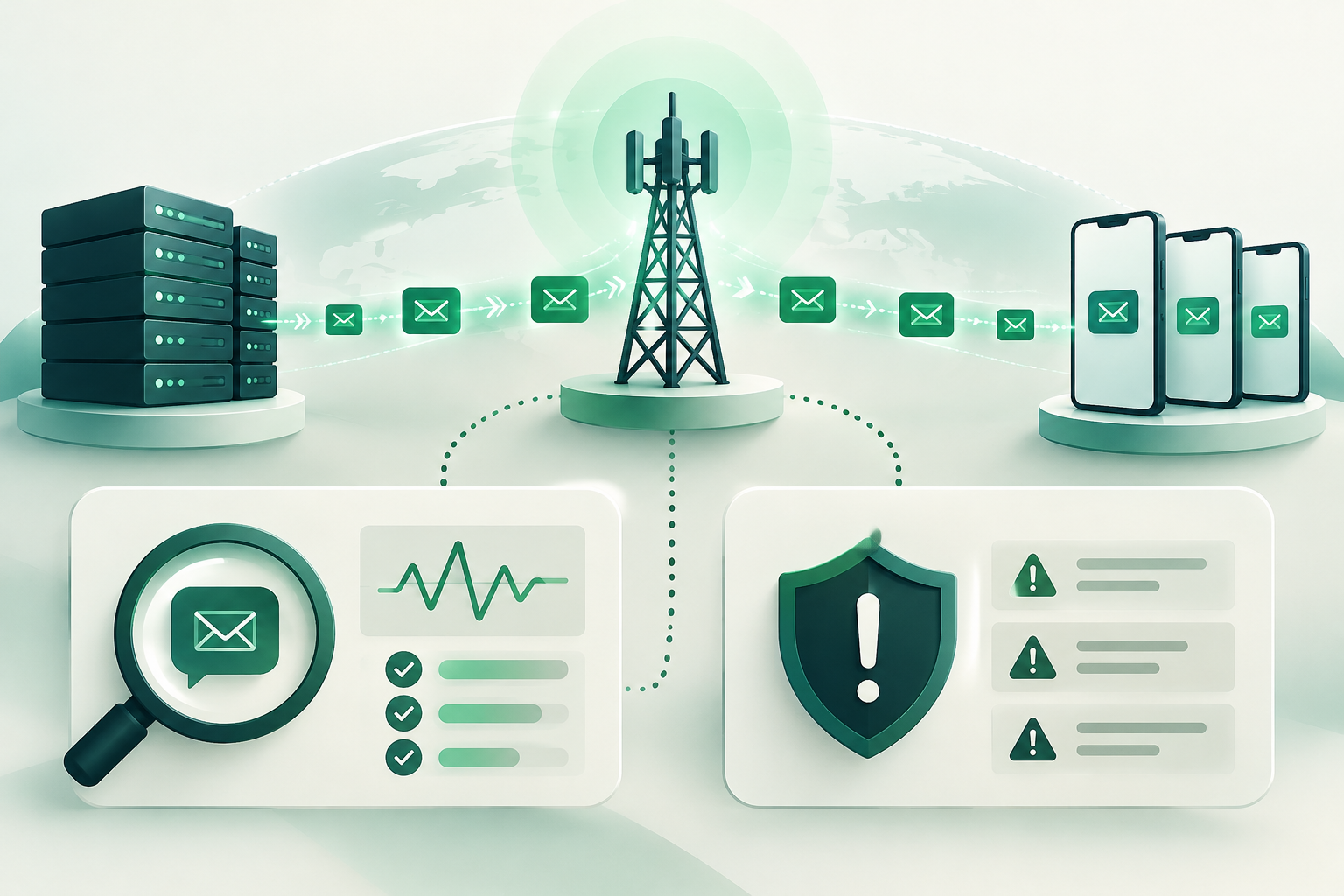
Inventory fields before enabling logging
Start by listing the fields each component can produce and who generates them. The list may include transaction identifiers, timestamps, reported status, error code or text, route metadata, and recipient data. Treat message content separately, rather than as just another technical field.
Do not assume that every field is available, has the same meaning across systems, or is necessary for every diagnosis. Verify what each interface actually logs and how identifiers relate across the chain. A recorded status response is not, by itself, independent verification that the message reached the device.
- For each field, record its source, purpose, format, sensitivity, and the systems where it is stored.
- Check the meaning of statuses and errors against the technical documentation applicable to your integration.
- Record time-zone differences and correlation rules that could affect event reconstruction.

Separate diagnostic data, personal data, and content
Classify each field by function and exposure. An internal identifier can make correlation easier, but do not assume it is anonymous without assessing whether it can be linked to a person or other records. A destination number may be necessary in some cases, but it can also identify a person. Content can reveal additional information and usually requires an explicit decision about whether it needs to be logged.
Where feasible for the stated purpose, consider alternatives that reduce exposure: log metadata instead of content, limit visibility of the destination, or use pseudonymized identifiers. Pseudonymization does not automatically make data anonymous or remove the need to control access and retention.
- Ask what failure could not be investigated without each field, and document the answer.
- Avoid copying content into general logs, dashboards, or tickets unless it is necessary for the case.
- If an investigation requires content or more identifiable data, limit capture to that case and to authorized personnel.
Design sampling around risk and purpose
Define different rules for routine operations, recurring errors, higher-impact incidents, and controlled tests. There is no sampling rate that works for every team: decisions should account for volume, the ability to investigate from a sample, and the impact of omitting relevant events.
For normal traffic, consider limited metadata logging. For errors, condition-based, bounded capture may be more useful than increasing retention for all traffic. For controlled tests, use authorized scenarios and test data where possible. For incidents, specify who can temporarily expand capture, which fields may be added, and when that expansion will be reviewed.
- Document the population, selection criteria, captured fields, and period of application.
- Define the condition that triggers expanded sampling and who can approve it.
- Use sampling and content capture only when needed for the defined purpose and permitted by applicable rules.
Avoid biased conclusions
A sample can help with diagnosis, but it does not necessarily represent all traffic. If more error events than normal deliveries are logged, or certain destinations, times, or routes are excluded, observations may distort the interpretation.
Document the denominator and selection method: how many events could have entered the population, which events were included, and what was left out. This helps distinguish a signal observed in the logs from a conclusion about all traffic. Do not present an operational sample as a complete measure of quality or delivery.
- Keep selection criteria reproducible and record any changes.
- Check whether the sample covers the categories relevant to the incident; do not assume a small sample represents them.
- Separate internal test results from any claims about commercial performance or final receipt.
Reduce exposure through access controls and separation
Controls should match the roles that need to consult the records. A team diagnosing transport errors may not need access to message content; a privacy review may need different information from a routine operational task.
Consider separating technical traces from more identifiable data and limiting correlation across systems to authorized users. Also review copies, exports, and tickets: controls on the primary system do not automatically protect copies created during an investigation.
- Define authorized roles, reasons for access, and a process for granting and revoking permissions.
- Limit exports and avoid duplicating complete traces in support tools.
- Review how access is logged and who can approve exceptional queries.
Retention by purpose and event, not by habit
Set retention periods by data category and purpose, and define the event that starts the clock—for example, trace creation or the close of an investigation. Do not adopt a generic period without checking operational needs and obligations applicable to your organization and jurisdiction.
Include a deletion process covering primary systems and copies under the organization's control. If an investigation exception applies, record who authorized it, why it is needed, what data it covers, and when it must be reviewed. A temporary exception should have a defined end point, rather than turning into indefinite retention by default.
- Assign a purpose, category, approved period, owner, and deletion mechanism to each set of records.
- Schedule reviews of open exceptions and document whether to close, renew, or delete them.
- Coordinate the policy with privacy, security, operations, and legal counsel before applying it.
Preserve evidence during an incident without keeping it indefinitely
When an incident requires retaining additional evidence, make the measure bounded: identify the case, select relevant records, restrict access, and assign an owner. Preserve what is needed for the investigation and avoid expanding capture to unrelated traffic without a documented reason.
When the investigation closes, review the exception and carry out the approved decision: delete data that is no longer needed or formally justify any continued retention. Recording that decision helps show that exceptional retention was reviewed rather than simply forgotten.
- Record the reason, scope, approver, owner, and review date.
- Check whether case copies still exist in auxiliary tools.
- Close the exception with an explicit decision to delete or a justified new review.
Frequently asked questions
What fields should every A2P SMS trace include?
No universal schema is established here. Define fields according to the purpose and components of your system; verify what each interface produces and avoid retaining fields that do not help resolve a defined problem.
Should the content of every SMS be stored?
The available information does not support a universal rule. Assess whether content is necessary for a specific purpose, consider less intrusive alternatives, and review applicable obligations before logging it.
How long should traces be retained?
There is no single period that suits every organization. Set periods by purpose and category, define when the clock starts, and validate the decision with the responsible teams and legal counsel.
Does pseudonymization eliminate privacy risk?
Not necessarily. A pseudonymized identifier may still be linked to a person using additional information. Maintain access controls, limits on use, and a retention rule.
Does a delivery status confirm that the recipient received the SMS?
Not by itself. Distinguish the status reported by the messaging system from independent verification of receipt on the device, and document the limitations of each source.
Sources consulted
- Protección de datos en la UE: principios y derechosComisión Europea
- Recomendaciones UIT-T de la serie E.164Unión Internacional de Telecomunicaciones
- Especificaciones técnicas 3GPP3GPP
- Recursos técnicos de redes móvilesGSMA