MCC and MNC in A2P SMS: What They Indicate and Their Limitations
MCC and MNC are codes associated with mobile networks, but their meaning and scope should be verified against relevant technical documentation. Learn how to assess their use without confusing them with confirmation of an operator, coverage, or A2P SMS delivery.

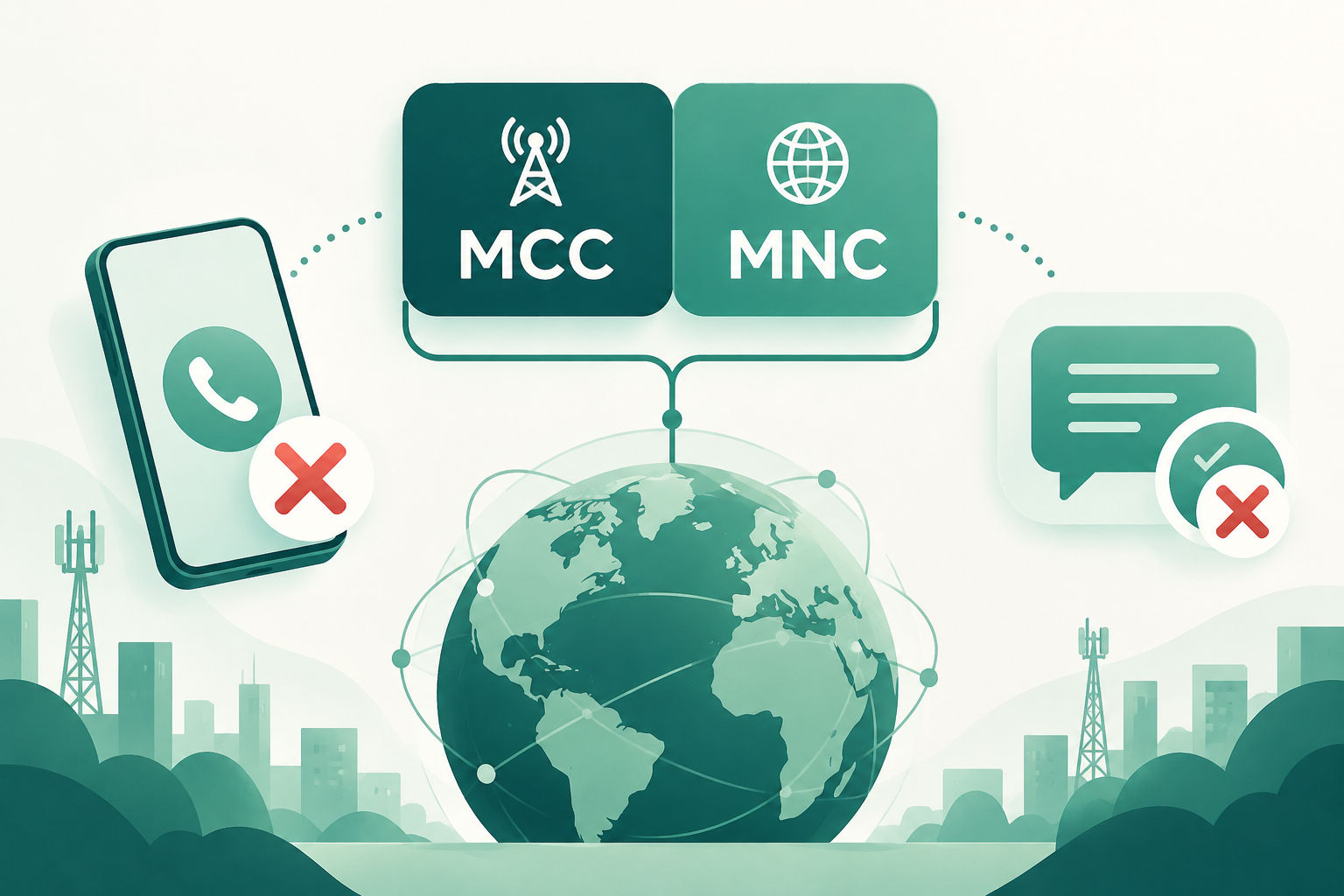
What MCC and MNC mean and what each code identifies
MCC and MNC stand for Mobile Country Code and Mobile Network Code. They are used as codes related to the identification of mobile networks. Without relevant primary technical documentation available for this article, it is not possible to specify their normative structure or the exact scope of each field here. Before assigning them a specific technical meaning, consult the corresponding official specification.
3GPP specification pages are a starting point for locating technical documentation, but the URL alone does not substantiate a specific definition. Check that the document you consult explicitly makes the claim you intend to use.
- Confirm whether the data you are consulting is an MCC, an MNC, or a combination of both.
- Check the format and representation convention used by the source; do not assume all databases present the codes in the same way.
- Do not confuse a network identifier with a phone number or an SMS delivery result.
Relationship to mobile numbering and number portability
ITU-T Recommendation E.164 is a reference for international telephone numbering. The evidence available for this article is not sufficient to establish a relationship between numbers and MCC/MNC codes or to determine a number’s current operator.
The relationship between numbering, assignments, and portability may require consulting relevant documentation and a source appropriate to the market and use case. Do not infer the current operator from a prefix without that verification.
- Keep the number being queried, the associated network code, and the source of that association separate in your records.
- If the destination may have been ported, verify what lookup mechanism your process uses and exactly what its result means.
- Consult the rules and official sources for the relevant market before turning a prefix into an operational rule.
What can and cannot be inferred
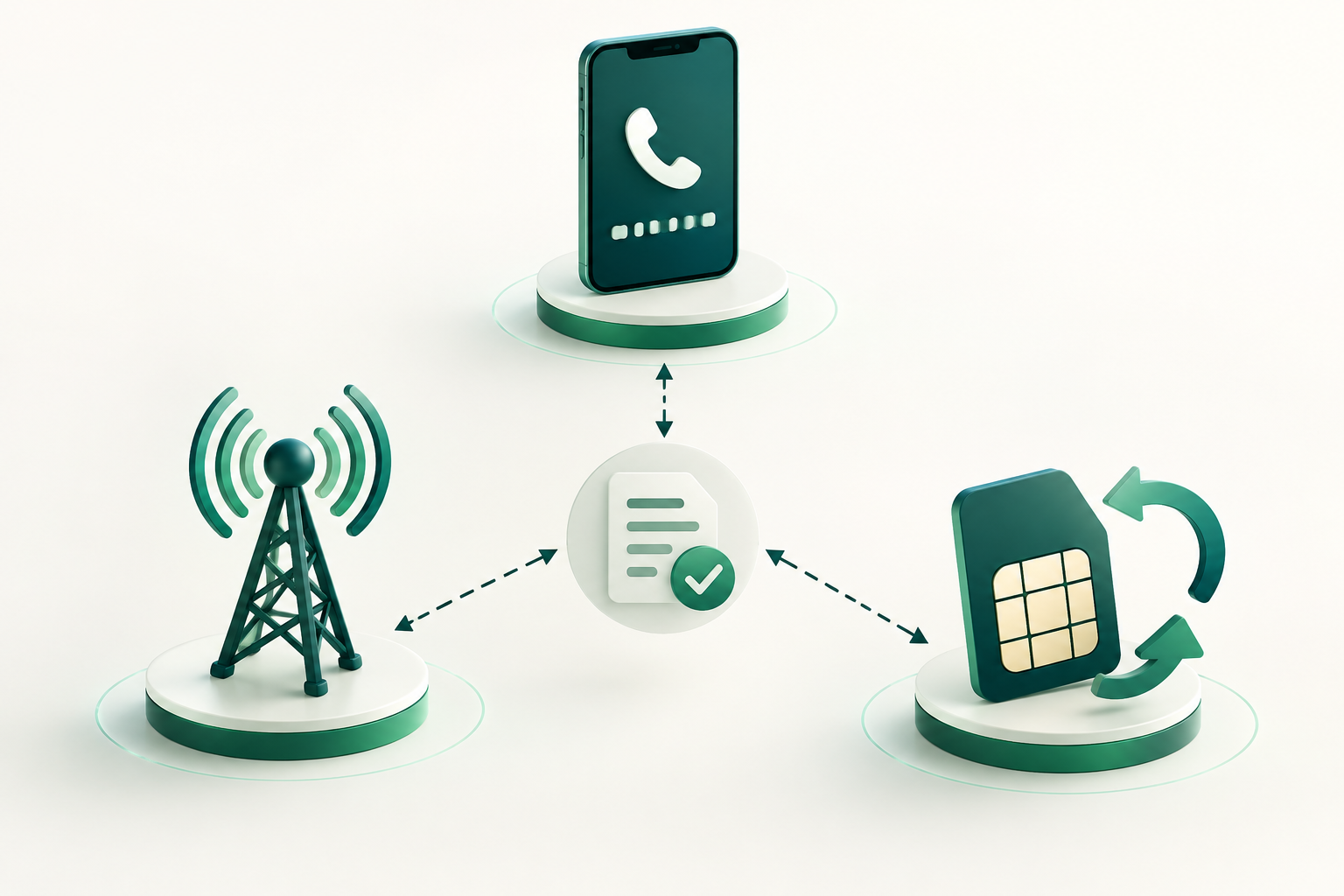
An MCC/MNC associated with a record can serve as an analytical signal if you know the source and what the field means. On its own, the data does not establish, based on the available evidence, that it identifies the current operator, that the number is active, or that a specific route is available.
There is also insufficient evidence here to attribute information about consent, identity, ownership, or deliverability to a code. Do not present these conclusions as verified.
Before describing what a DLR proves about receipt on a phone, consult relevant technical documentation and delivery evidence. Do not present it as independent confirmation of receipt without that support.
- Treat the code as a signal that requires verification, not as a verdict.
- Do not present it as proof of the current operator, coverage, consent, or delivery.
- Check claims against relevant technical documentation and appropriate operational evidence.
Evaluating data sources
There is no verifiable evidence available to recommend a method for evaluating MCC/MNC databases or to establish their update dates, coverage, or methodology. Verify these aspects directly with the source or relevant official body before relying on a lookup.
Document the meaning and scope of the data you use. Avoid automating irreversible decisions based on a record whose interpretation is unclear.
- Provenance: Which entity publishes, maintains, or supplies the data?
- Date: When was the record generated or updated, and when was it queried?
- Scope: Which countries, ranges, number types, and situations does it cover?
- Method: Is it a static assignment, a dynamic lookup, or an inference? What does each response mean?
- Limitations: How are ported, unknown, unassigned, or incomplete records handled?
- Traceability: Can you save the lookup and its result to compare them with operational evidence?
Using codes to plan and diagnose destinations
If you incorporate MCC/MNC into an analysis, document what the data represents and its source. The available evidence does not support specific recommendations for using it to plan routes or diagnose discrepancies; do not make it the sole basis for an operational decision.
Keep claims about network codes separate from messaging observations. To establish what a route measurement demonstrates, consult relevant documentation and operational evidence.
- Define what you intend to analyze before using the codes.
- Record the source and date alongside the queried data.
- Do not generalize from a single observation.
- Mark cases with missing or contradictory information as unresolved.
- Make sure messages are legitimate and have the required consent.
Operational case: investigating a discrepancy
The available evidence does not support presenting a discrepancy case as a technical conclusion. If a database and a sending observation do not match, do not attribute the reason to the code or route without reviewing relevant documentation and operational evidence.
Record the queried data, its source, and what was observed during the test separately. Keep the discrepancy open until an explanation can be substantiated.
- Record the queried data, its source, and the relevant date.
- Verify what the source says about the meaning of MCC/MNC.
- Document the conditions and results of any authorized test.
- Do not present a reported status as independent evidence of receipt without adequate support.
- Mark the discrepancy as unresolved until relevant documentation and evidence are available.
Recording the information consulted
Record the queried data separately from what it allows you to conclude. An association in a database does not, by itself, confirm the current operator.
Apply data minimization: retain only the information needed for the defined purpose, restrict access to those who need it, and establish a retention and deletion policy in accordance with applicable rules. There is no available evidence to recommend a universal retention period.
- Number or destination, only when necessary and in accordance with the applicable data protection policy.
- MCC and MNC as returned by the source, without changing their original format.
- Source name and provenance, version if available, stated update date, and time of query.
- Documented scope and meaning: assignment, dynamic lookup, or another classification.
- If an operational test is recorded, keep the route, time, reported status, measured latency if available, and any available receipt evidence separate.
- Confidence level, uncertainties, discrepancies, and action taken.
- Date or condition that triggers a new verification, without assuming a universal interval.
Technical references and responsible use
The ITU-T, 3GPP, and GSMA URLs below are starting points for locating documentation, not standalone proof of this article’s technical claims. Consult relevant documents and check that they explicitly support the claim you intend to make.
General references do not replace country-specific documentation, the number-intelligence source, or operational evidence. Distinguish between what a source defines, what a lookup returns, and what a messaging test observes.
- ITU-T, Recommendation E.164: https://www.itu.int/rec/T-REC-E.164/
- 3GPP, specifications by series: https://www.3gpp.org/specifications-technologies/specifications-by-series
- GSMA, mobile network resources: https://www.gsma.com/solutions-and-impact/technologies/networks/
Frequently asked questions
Can MCC and MNC tell me which operator currently serves a number?
The available evidence is not sufficient to establish that. The relationship between a number and network codes depends on the source and method used. Do not infer the current operator from a prefix alone.
Does an MCC/MNC confirm that a destination has coverage or will receive an A2P SMS?
The supplied evidence does not establish that the codes confirm coverage, route availability, or delivery to a device. Verify these claims against relevant technical documentation and operational evidence.
What should I verify in an MCC/MNC database?
Verify the data’s meaning, provenance, date, scope, and method directly with the source. The available evidence does not establish a universal update interval or support a specific evaluation method.
How should I use MCC/MNC to choose a route?
The evidence provided does not support a specific operational rule. Do not use the code as the sole basis for choosing a route; consult relevant documentation and test any hypothesis against operational evidence.
Does a DLR prove that the message appeared on the phone?
The evidence available for this article does not establish what a DLR proves about receipt on the device. Do not present it as independent verification of receipt without relevant technical documentation.
Sources consulted
- Especificaciones 3GPP por serie3GPP
- Recomendación E.164Unión Internacional de Telecomunicaciones (UIT-T)
- Recursos sobre redes móvilesGSMA
- Diferencias entre MCC y MNCMessangi Support
- Información sobre MCC y MNCWireless Logic Help